Sample report
Sample tree inspection report
A complete 12-page report generated by ARB-FLO from a fictional survey of six trees. Browse its main pages below, or download the PDF to see every page as an inspector would issue it.
- Issue 1
- Numbered issue
- 12 pages
- Cover to declaration
- 6 trees
- Each with a record
About this sample
The report was generated by ARB-FLO from survey data written for demonstration: the client, the site at Riverside Park and the inspector, Alex Morgan, are invented, and the photographs are sample images. It is the same report shown on the home page, not a mock-up drawn for this website.
The sample uses fictional data. Its recommendations have not been independently validated by a professional, and nothing in it means that ARB-FLO or the report is endorsed by any body or meets any standard.
Reports that people create in ARB-FLO stay in the app. None is published here or anywhere else on this website.
What the report contains
- Project information. Client, site, date, weather and inspector, captured once and carried through.
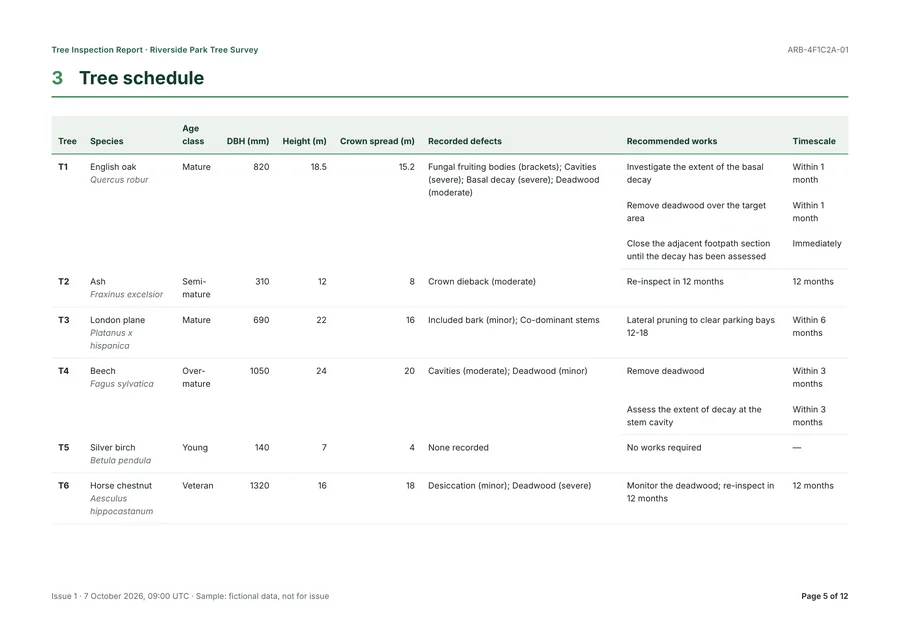
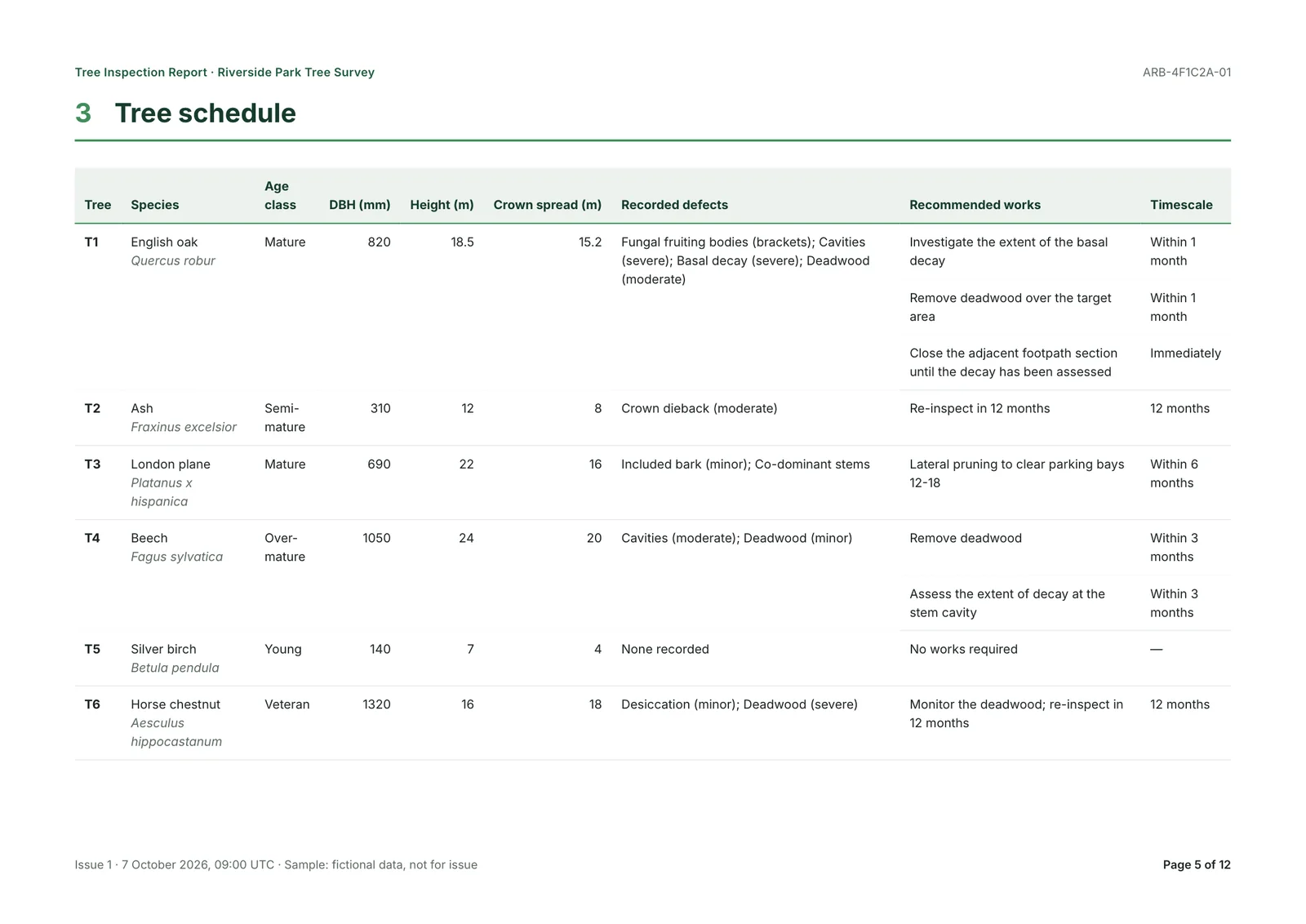
- Tree schedule. Every tree in one table, with its defects, recommended works and timescale.
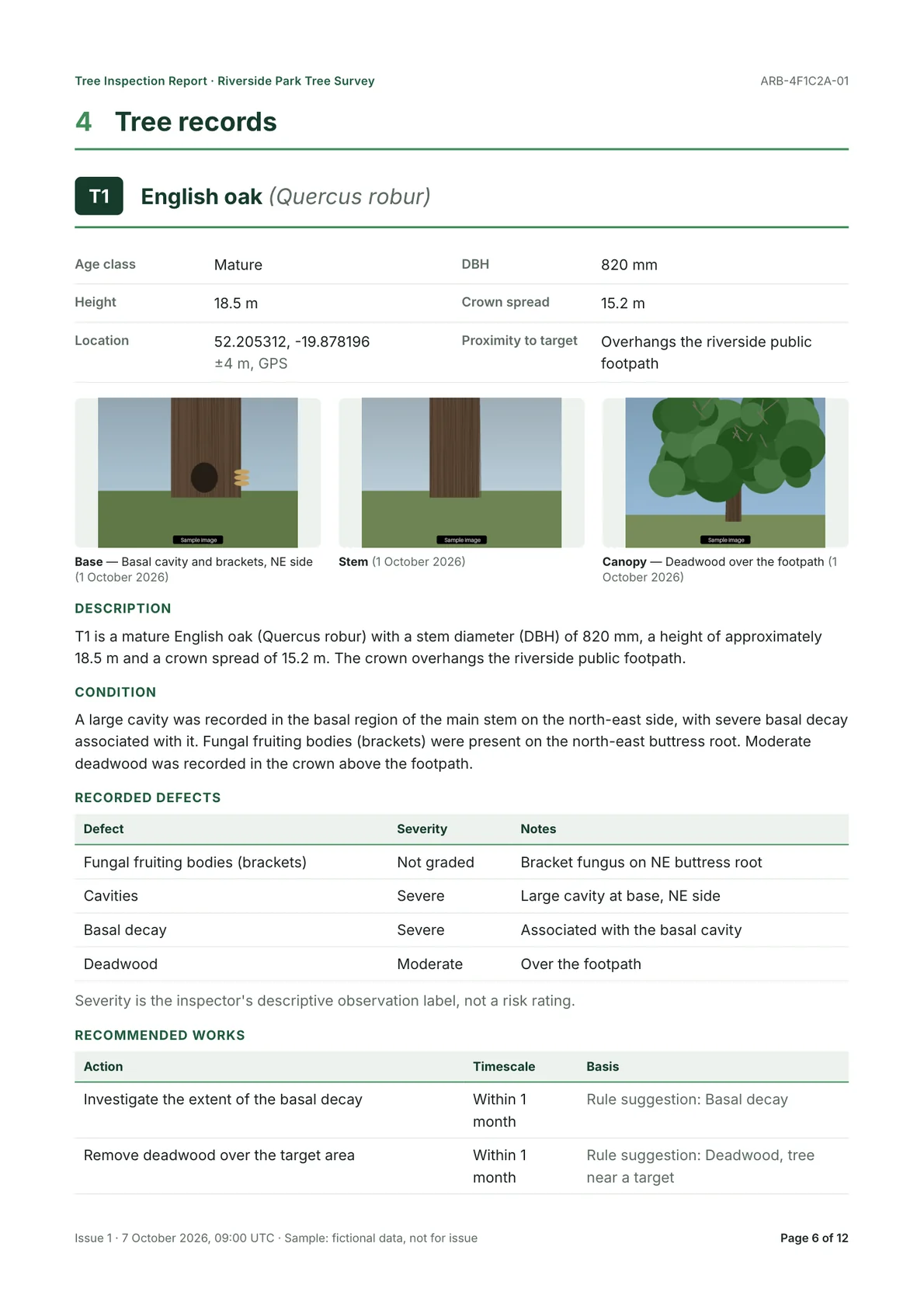
- Findings. Recorded defects with their severity, tree by tree.
- Recommendations. Approved works, each with its timescale and basis: a knowledge-base rule or the inspector.
- Photographs. Base, stem and canopy photographs alongside each tree record.
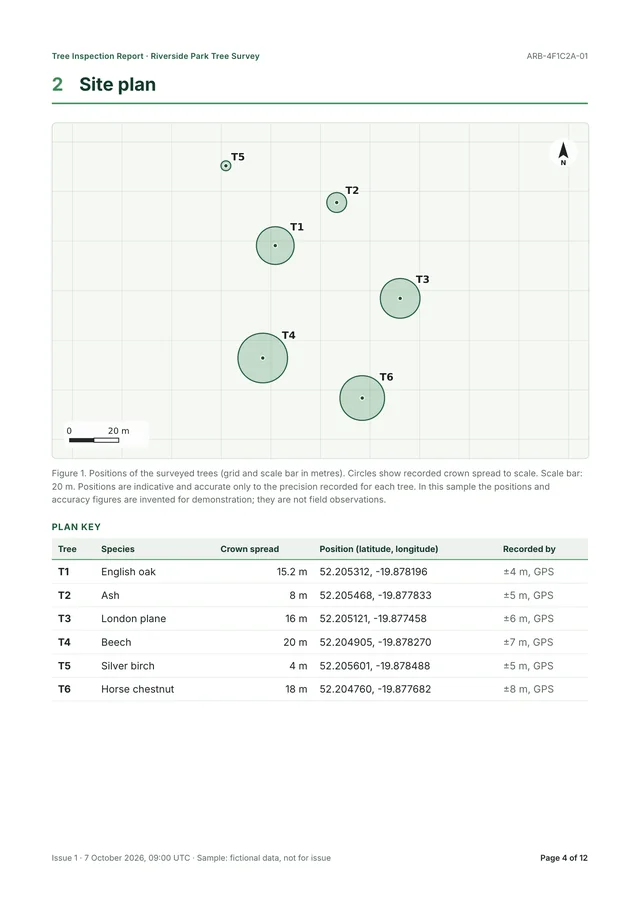
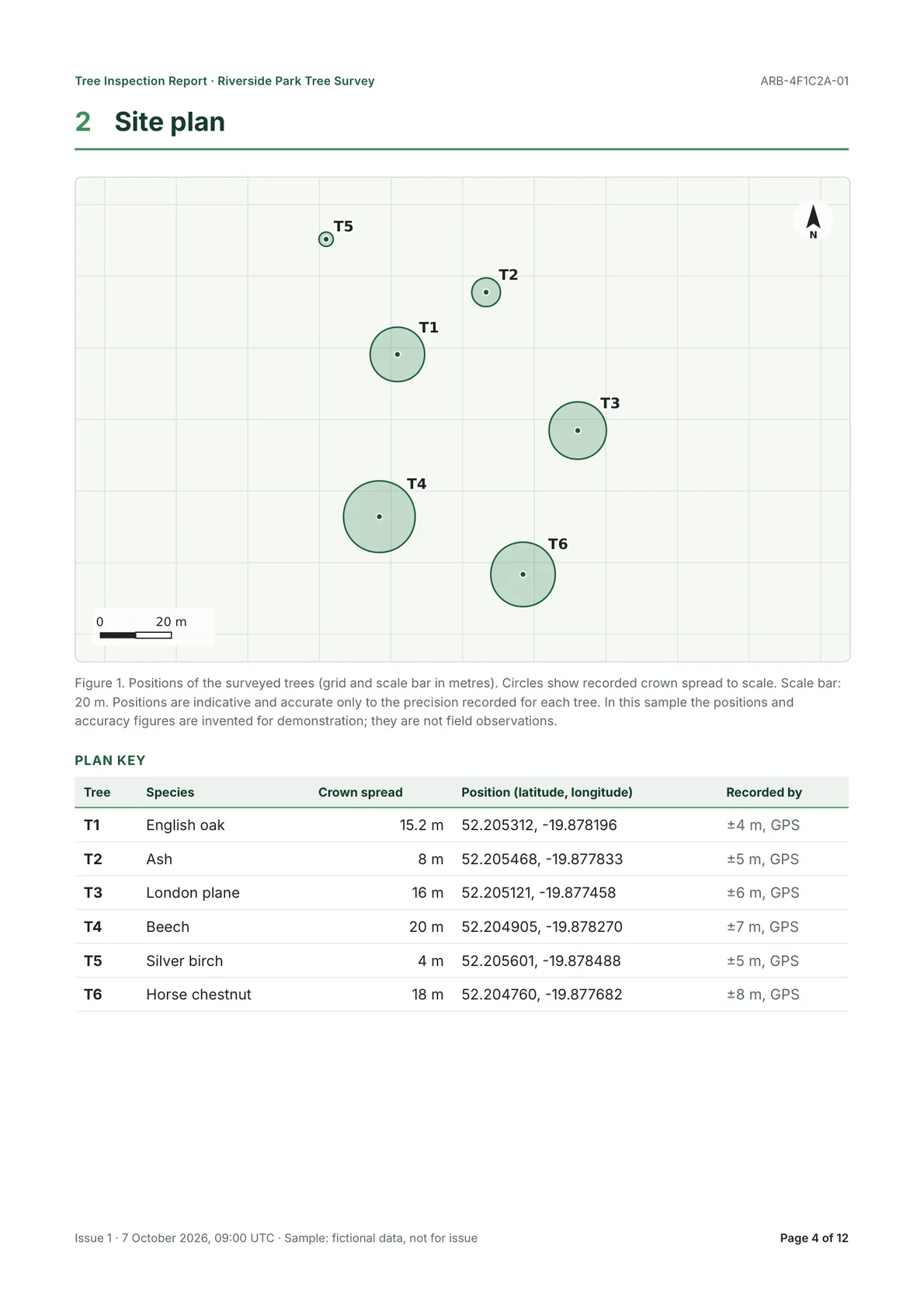
- Location. A site plan drawn from the recorded GPS positions, with each tree’s accuracy stated.
- Numbered issues. Each issue is numbered and stored with a snapshot of the data behind it.
- Professional formatting. A consistent cover, contents, headers, footers and page numbers, as a PDF.
Page by page
Six of the twelve pages. Select a page to open it at full size.
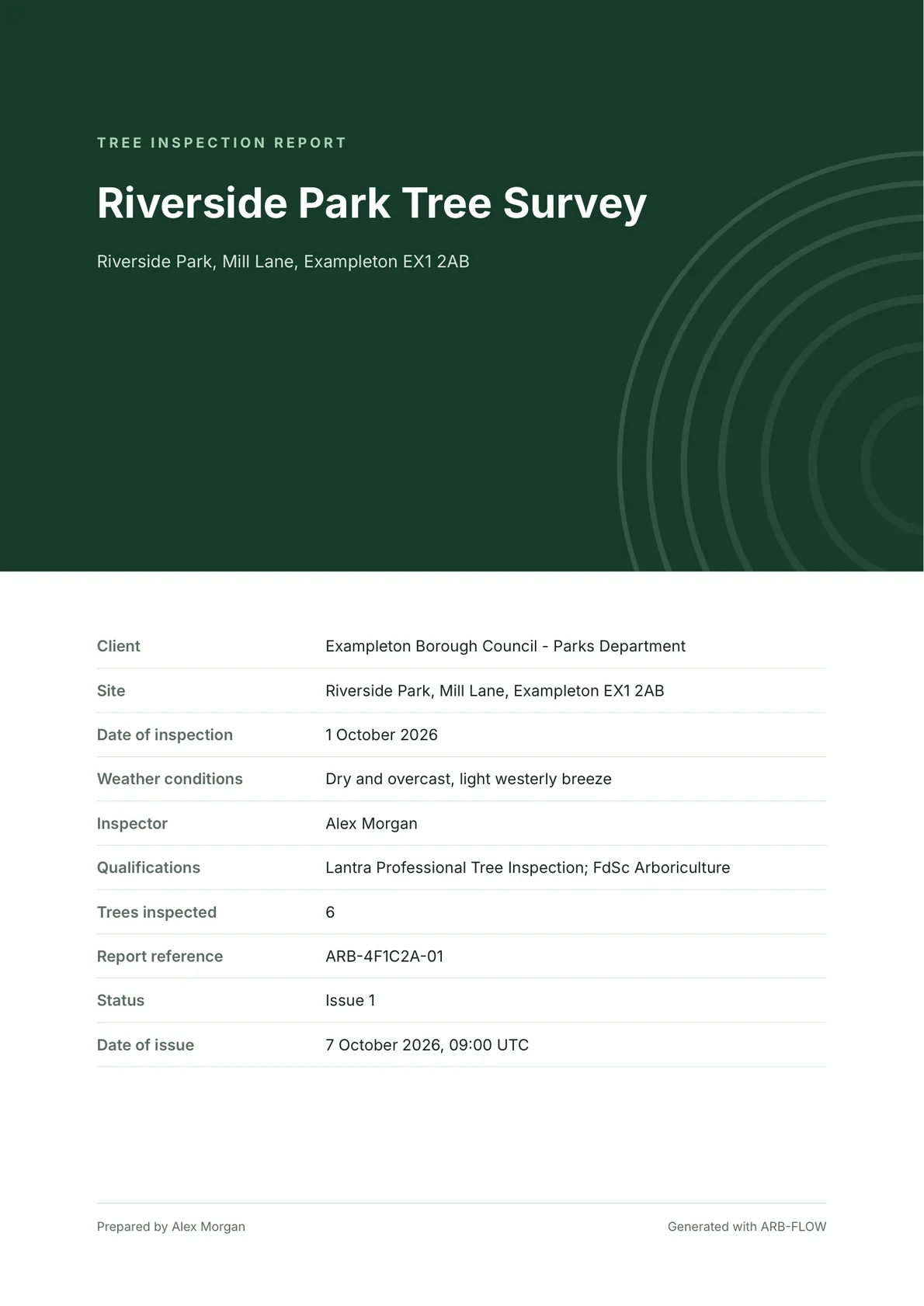
Page 1: Cover
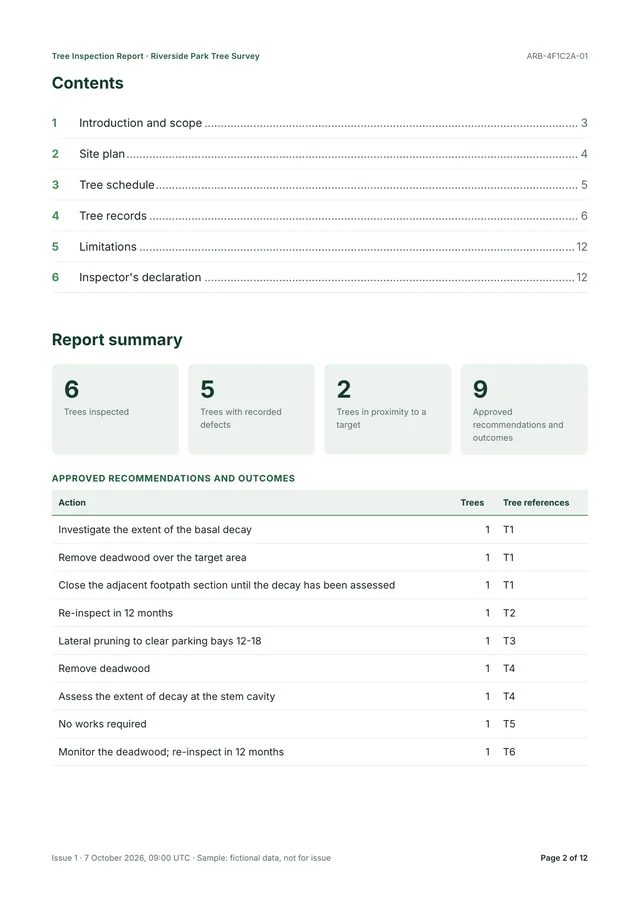
Client, site, inspector and a numbered issue on the cover.
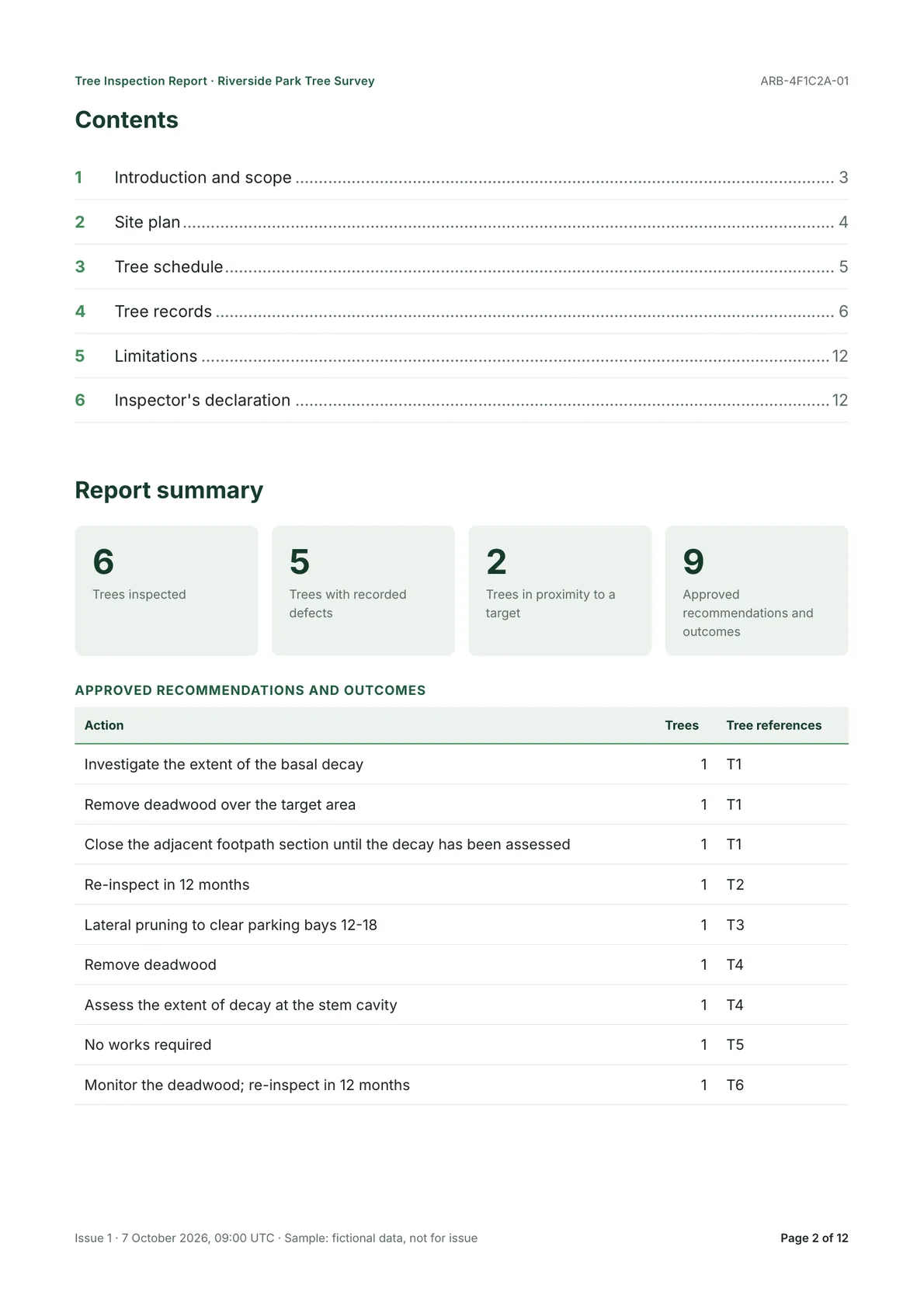
Page 2: Contents and summary
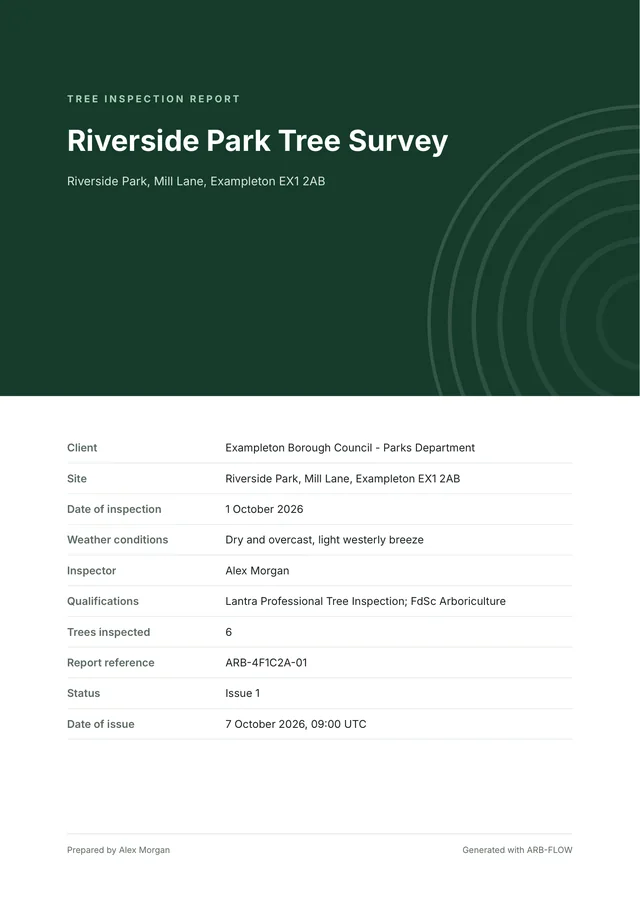
Contents, headline counts and every approved recommendation by tree.
Page 4: Site plan
Tree positions plotted to scale, with a plan key giving each position and its stated accuracy.
Page 5: Tree schedule
Every tree in one table: species, size, defects, works and timescale.
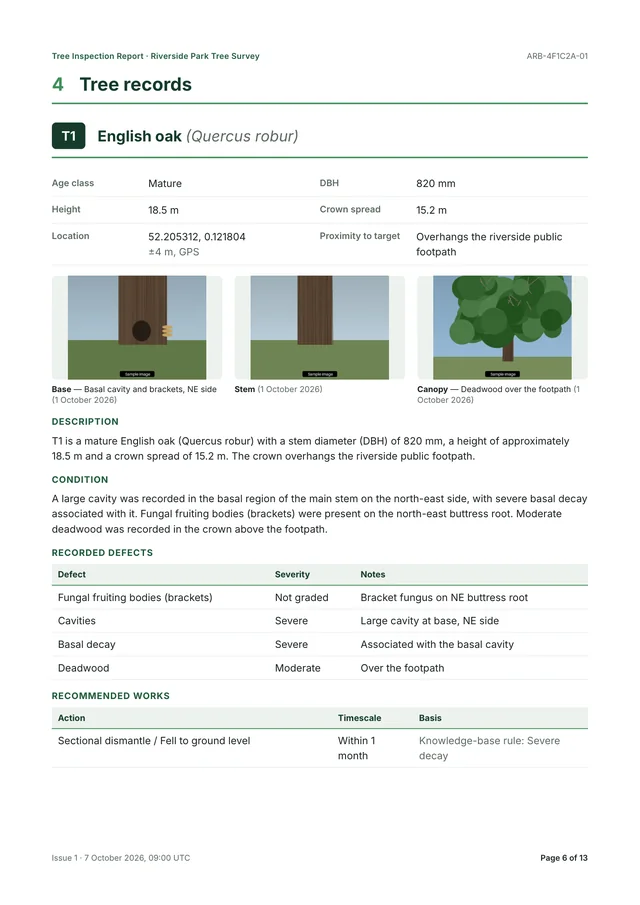
Page 6: Tree record
A record for each tree, with photographs, condition, defects and works; a long record continues onto the next page.
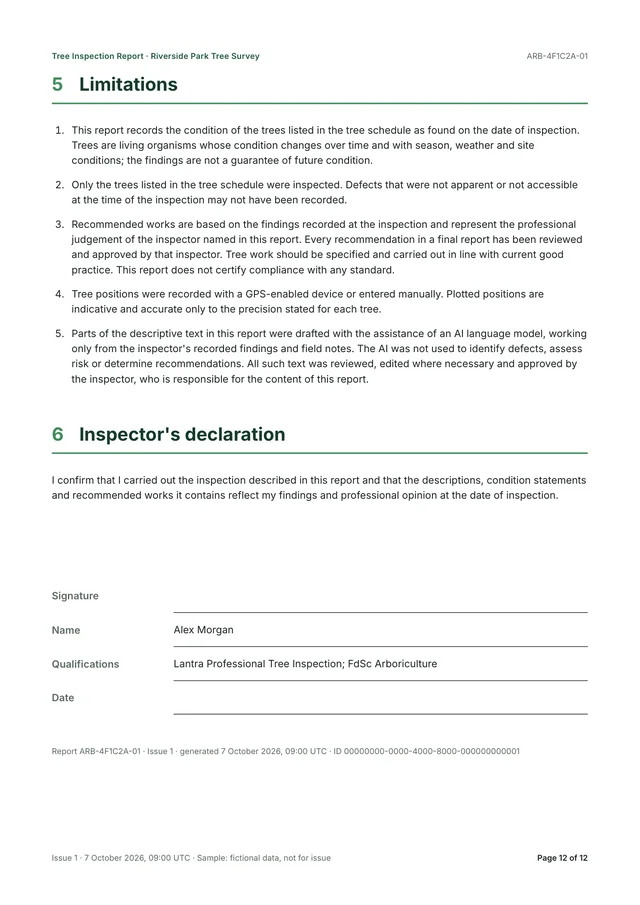
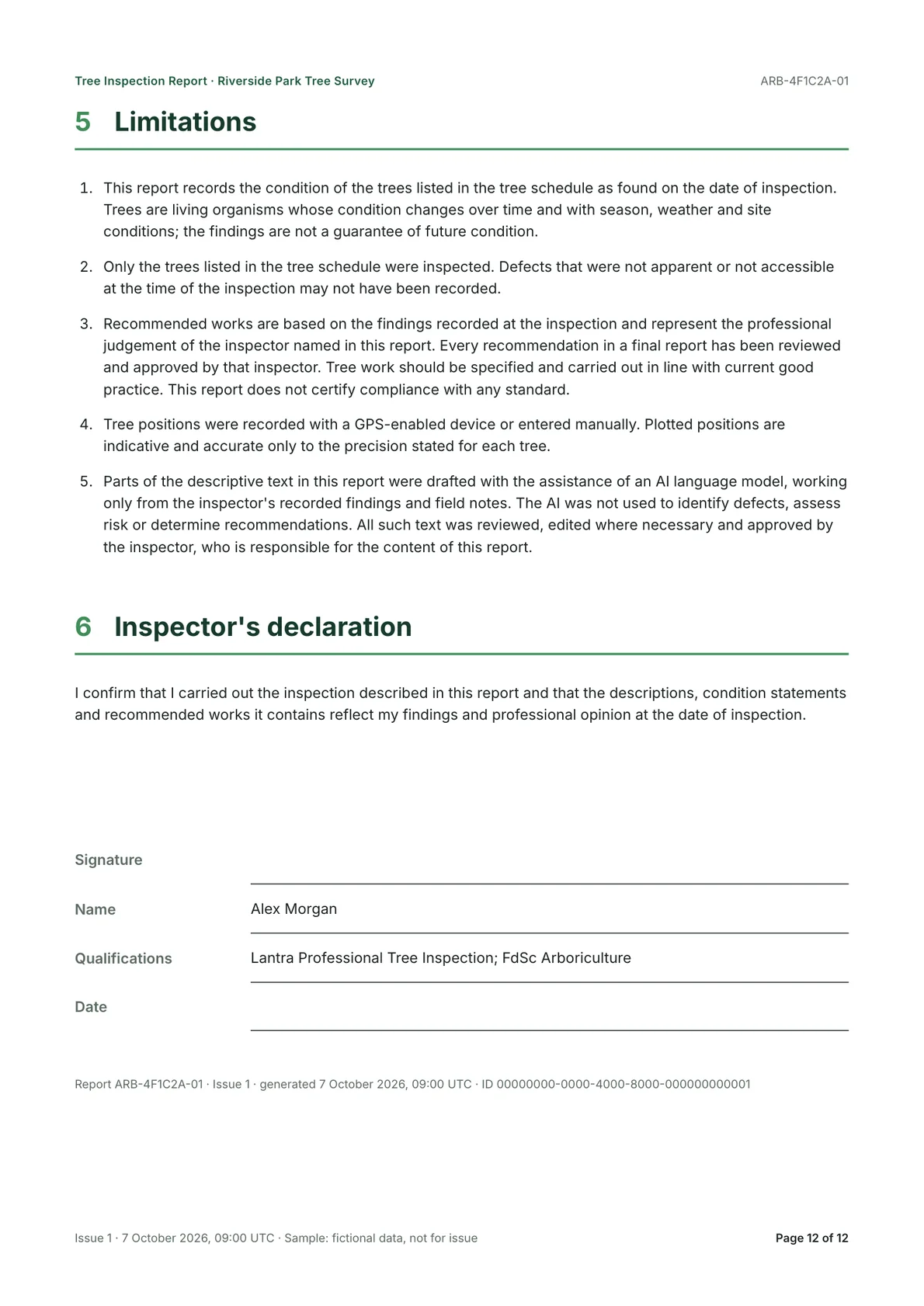
Page 12: Limitations and declaration
Stated limitations, how AI-assisted text was handled, and the inspector’s declaration.
The limitations the report states
Every report ends with its limitations and the inspector’s declaration. In this sample, the limitations say, in summary:
- It records the trees in the tree schedule as found on the date of inspection. Trees change with time, season and weather, so the findings do not predict their future condition.
- Only the trees in the schedule were inspected, and defects that were not apparent or not accessible on the day may not be recorded.
- Recommended works are based on the findings recorded at the inspection, and the named inspector reviewed and approved every one of them.
- Tree positions come from a GPS-enabled device or were entered by hand, and are accurate only to the precision stated for each tree.
- Where descriptive text was drafted with AI assistance, the report says so: the AI worked only from the recorded findings and notes, was not used to identify defects, assess risk or decide works, and the inspector approved the text.
A sample shows the format, not your results: a real report contains only what its inspector recorded and approved, and the inspector remains responsible for its content. In this sample the inspector’s approvals are part of the fictional data.
How a report like this is made
The data behind it is captured on site, tree by tree, then reviewed and approved before the report is issued. Read how ARB-FLO handles a tree survey, including what works offline and what does not, or see the five steps on the home page.
Demo and pilot programme
See one built from the first tree
A demo runs a survey from the first tree to the issued PDF. To try ARB-FLO on your own surveys, ask to join the pilot programme.